EcoScrap Technology
The First Step Toward Sustainable Pharmaceutical Packaging: A Bold Initiative by a Leading Domestic Company
THEME
Fact Report 〉Aiming to achieve both pharmaceutical packaging quality and eco-friendliness
PTP sheets, which are used to package medicine, are vital to our everyday life.However, the manufacturing process generates plastic waste, known as scrap, which contains no aluminum. In Japan, this scrap amounts to 1,300 tons annually.In pharmaceutical packaging, quality and a stable supply are paramount. Traditionally, scrap has been considered inevitable in order to maintain high packaging standards.On the other hand, with increasing demand for considerations toward the global environment, waste reduction has become an issue that we must address.Against this background, we took on the challenge of developing next-generation PTP sheets that reduce environmental impact while maintaining quality.These efforts are embodied in the technology known as EcoScrap.

MISSION
Making the newly developed technology the preferred choice
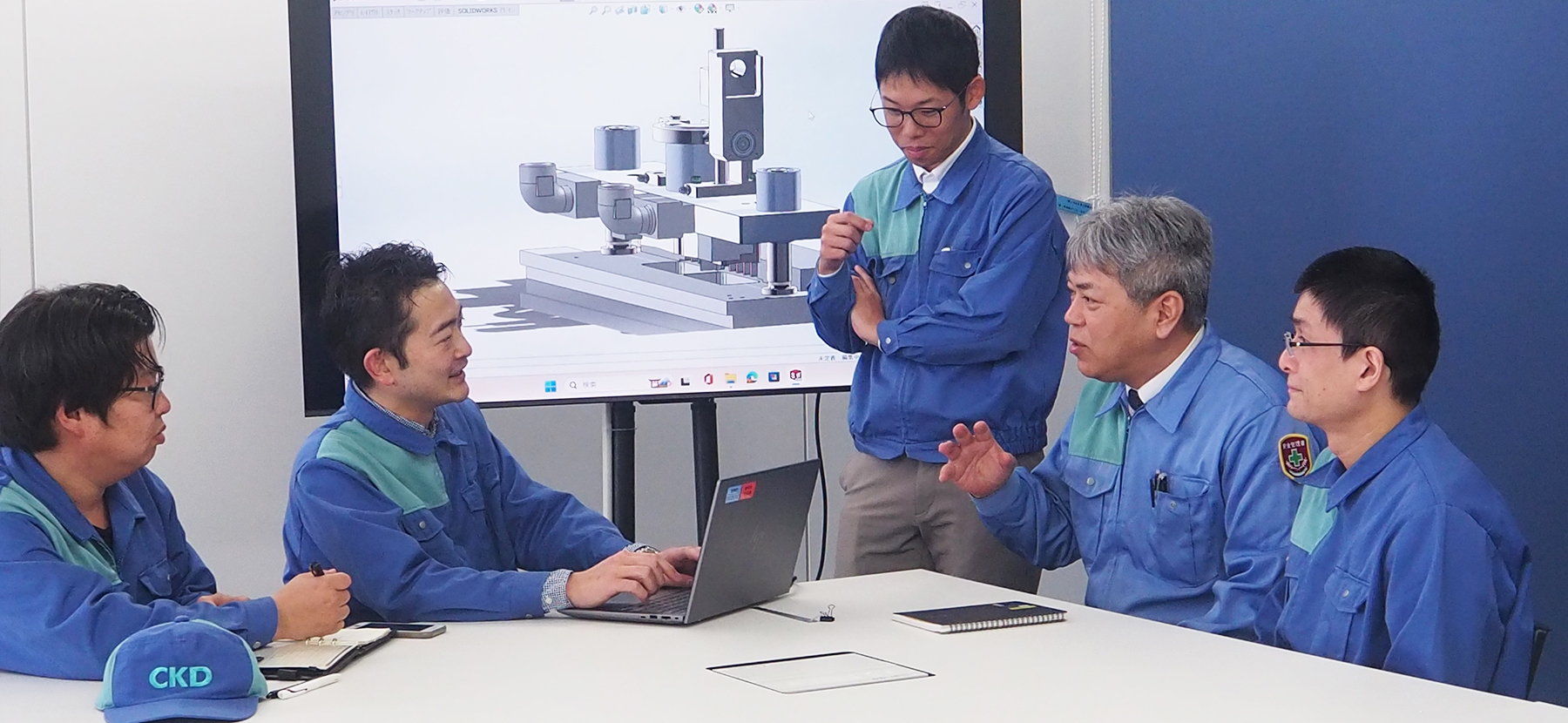
With this technological development, we emphasized not only eco-friendly technologies but also their usability in actual operations.During the development, some team members expressed cautious opinions, but we consistently maintained a stance of giving top priority to quality and stable operation.To achieve that, we proceeded with development while always keeping the perspectives of manufacturing sites in mind, rather than focusing solely on the feasibility of newly developed technology. In other words, the new technology needed to be applicable to actual manufacturing processes without difficulty and capable of withstanding long-term operation.Indeed, eco-friendly technologies are important, but they are not truly practical if they place a burden on manufacturing sites.We must develop technologies that are widely accepted as practical and safe, and put them into practical use.This was our mission in our technology development efforts.
APPROACH
Embodying our long-cherished ideas in this technology
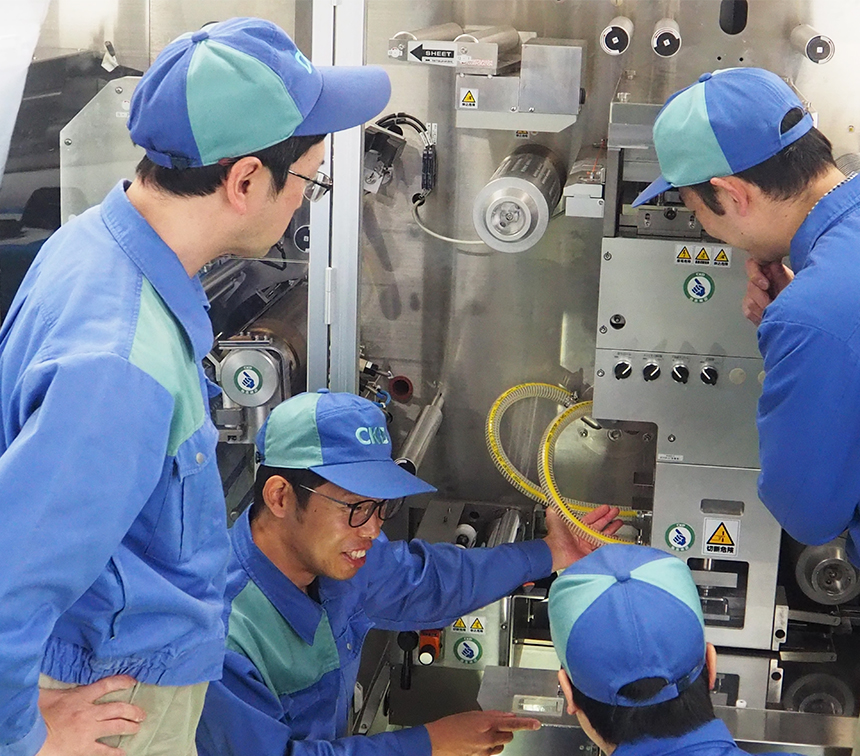
With the aim of contributing to environmental conservation while maintaining packaging quality, we have continued to study waste reduction for many years.It was not easy to put such a technology into practice immediately. However, with the firm determination to bring it to fruition, we continued to analyze the issues and consider possible directions.One of the major challenges we faced was developing a technology to collect triangular scrap (left photo).The triangular scrap has a completely different shape from conventional scrap. Collecting such scrap cannot be achieved simply by extending conventional technologies, presenting us with a new challenge.This required us to change our way of thinking. We combined the structures and technologies we had developed for other machines, and further analyzed our experience and insights to consider structures suitable for collecting triangular scrap.This way of thinking was shared within the technology department during the concept study phase and adopted as one of the feasible directions.After that, prototype development and verification were repeated many times. In due course, a structure capable of reliably collecting triangular scrap was developed.
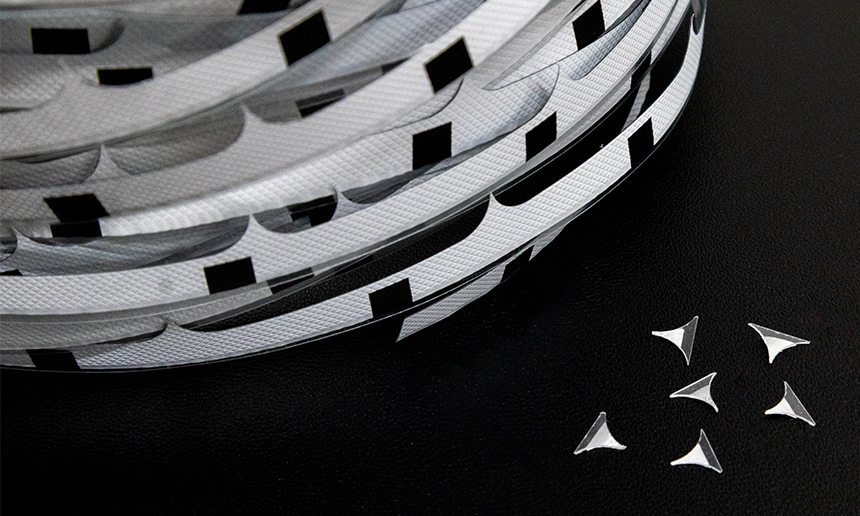
Triangular scrap with a shape completely different from conventional scrap (left)
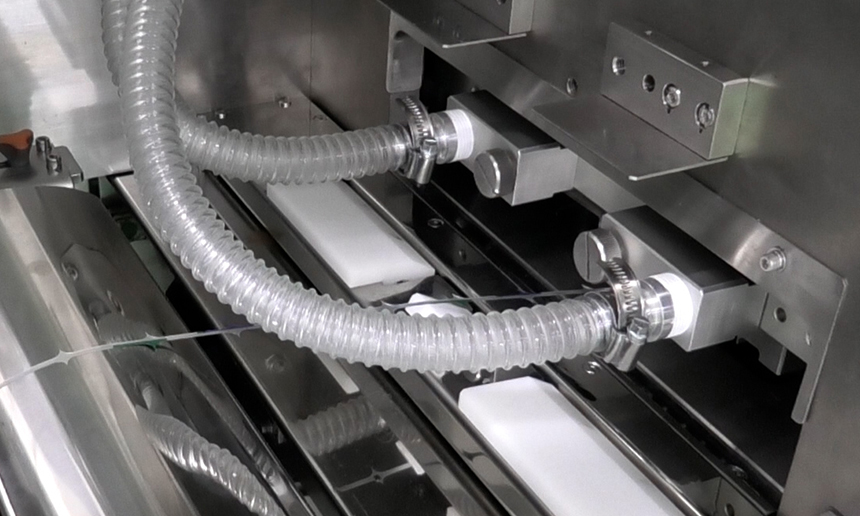
Structure capable of collecting triangular scrap without omission
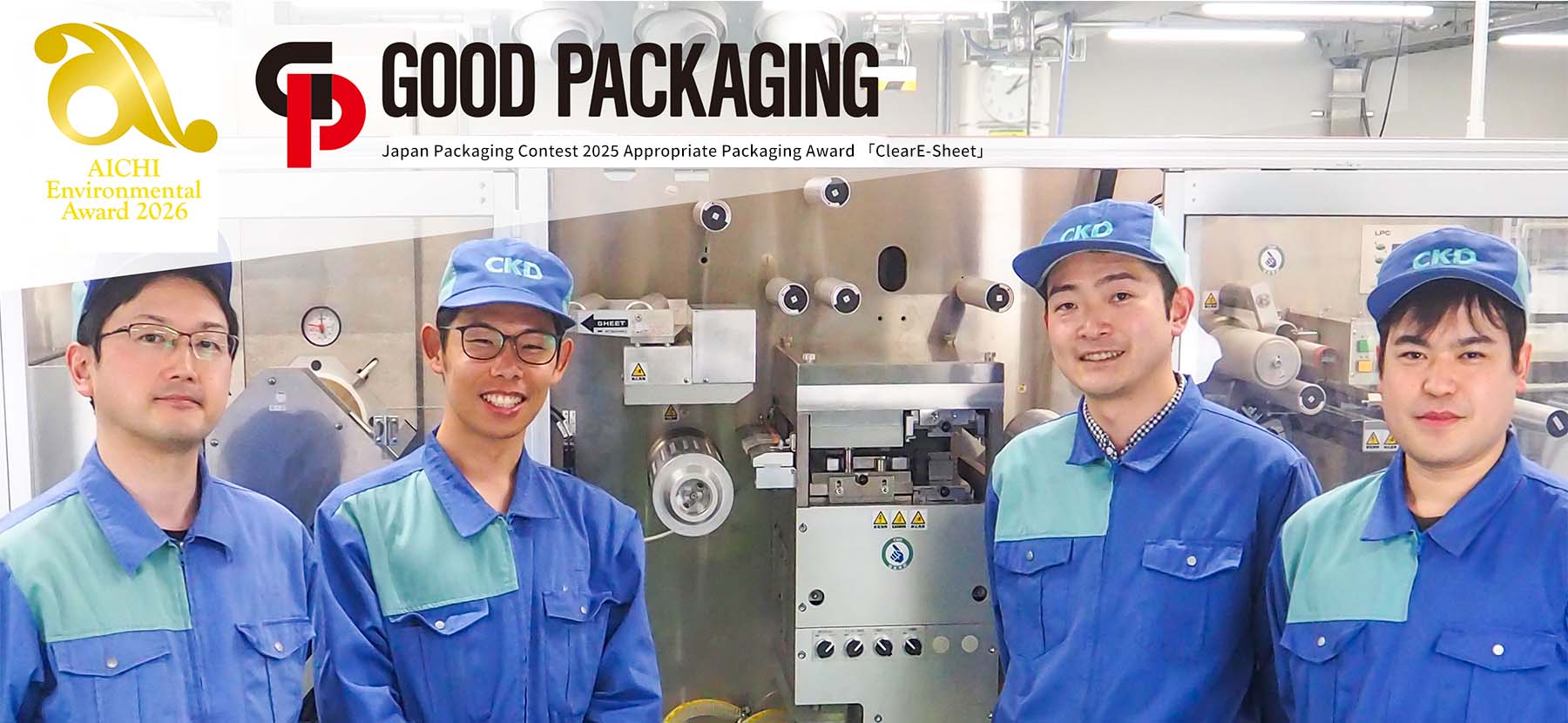
At the same time, we improved other technologies, including film transfer and heating methods.We examined technologies one by one, combined them on actual machines, and verified and organized the results.Through steady, cumulative efforts, we gradually found a way to integrate these technologies into a single, stable process.Customers also attended the verification process. While sharing their concerns, we proceeded with verification and made progress toward practical application.In this way, we have refined our long-cherished ideas and embodied them in a new process. As a result, we have established a technology that reduces the amount of scrap generated in the packaging process by more than 70% compared with conventional technology while maintaining stable operations. This technology has been successfully put into practical use under the name EcoScrap Technology.If this system is introduced throughout Japan, scrap is expected to be reduced by more than 910 tons annually and CO₂ emissions by approximately 4,100 tons annually.The EcoScrap Technology has received high praise for its uniqueness and environmental contributions. At the 2025 Japan Packaging Contest, we received the Appropriate Packaging Award in the packaging technology category. We also received the Excellence Award at the 2026 AICHI Environmental Awards.
VISION
As a leading domestic manufacturer of pharmaceutical packaging machines
The EcoScrap Technology we have developed is the result of initiatives undertaken with like-minded customers. In these initiatives, we reexamined the use of PTP sheets—which had long been taken for granted—with the clear goal of reducing environmental impact. These efforts contribute to the fulfillment of our purpose.Through this experience, we have come to believe that, as a leading company in the field of pharmaceutical packaging machinery in Japan, we have a responsibility to take the initiative in shifting the role of packaging from disposal to recycling.Protecting limited resources should not be limited to consideration of the global environment. It should also be regarded as a form of social contribution, with the coming decades and even centuries in mind. In other words, passing on a sustainable society to the next generation is an important mission.To achieve this, not only technological capabilities but also co-creation with customers and partners is crucial.The EcoScrap Technology can demonstrate its true value and contribute to society when it is implemented at facilities and used at manufacturing sites.We will continue our efforts to deliver solid value to society by expanding cooperation with like-minded partners.