
Reducing the burden of vacuum suction transport of resin materials
Daito Co., Ltd.
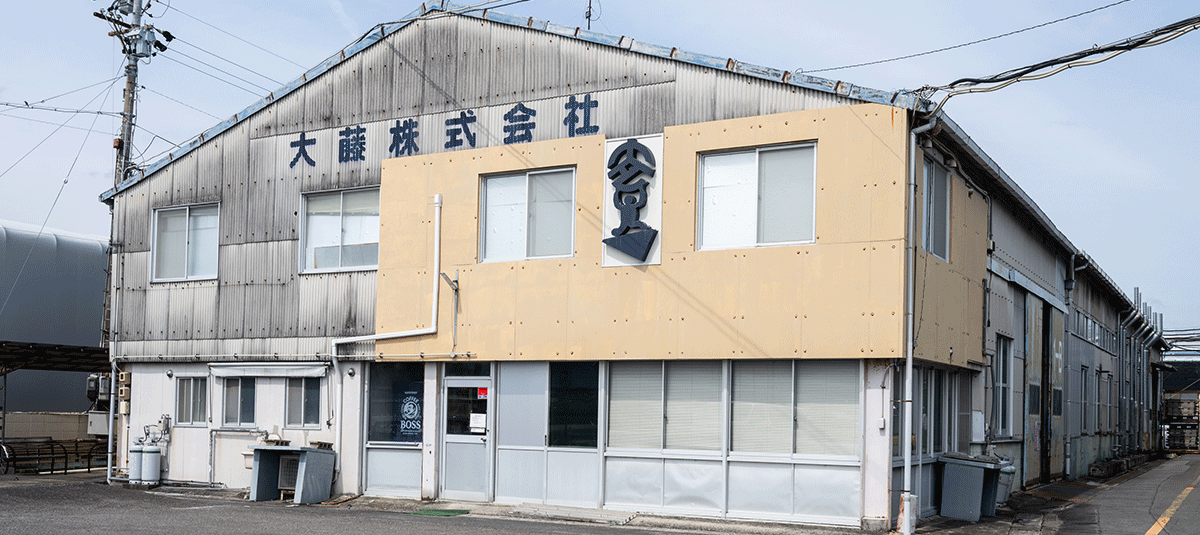
Daito Co., Ltd. is based in Inabe City, Mie Prefecture. The company began manufacturing expanded polystyrene in 1963 and today also produces polystyrene foam and urethane foam. Its expanded polystyrene serves a wide range of applications — cold storage for fish and vegetables, cushioning for home appliances, patterns for metal casting — and its advanced molding and fabrication technology supports a broad product mix.
Manufacturing a new product required transporting workpieces heavier than anything handled before, so the company was considering a balancer that anyone could operate easily. This case study shows how CKD's Flex Arm reduced the burden of transporting heavy resin materials. Even large workpieces can be suction-transported stably with little risk of dropping, contributing to improved safety. The material also has a fibrous surface that made direct handling hazardous; transporting it with Flex Arm lowers the risk of injury.
Challenges
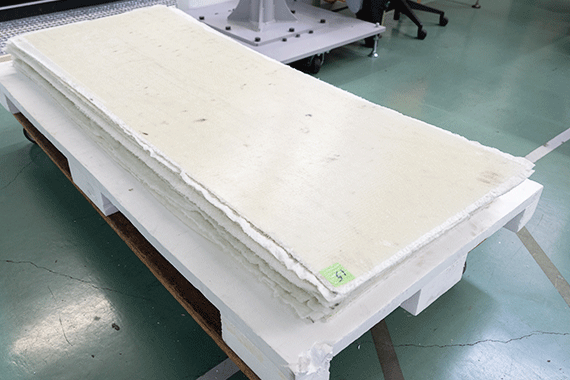
Transporting 15–20 kg workpieces many times a day
Production of the new product was expected to require transporting 15–20 kg workpieces about 100 times a day. The cumulative weight reaches as much as 2,000 kg (20 kg × 100 lifts), placing a physical burden on operators' arms and lower backs. The workpieces are large, wide resin materials that are hard to grip by hand, forcing operators into awkward postures.

Reason for Adoption
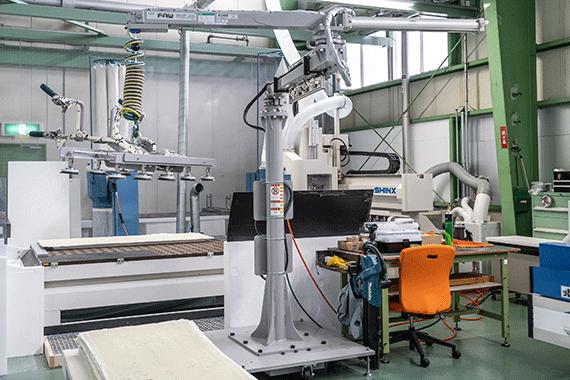
With expanded polystyrene as their main product until now, the company had no experience evaluating heavy-load transport — CKD was able to present its products at exactly the moment the customer needed them
The company was considering a balancer to reduce the burden on operators. An inquiry came in through a CKD exhibition and a marketing automation (MA) email, and sales followed up immediately with a visit and proposal. Ease of operation, together with a price within the expected range, led to adoption. The customer commented that having the product introduced right when they wanted it, backed by prompt sales follow-up, shortened their evaluation time and made installation go smoothly.
Effects After Introduction
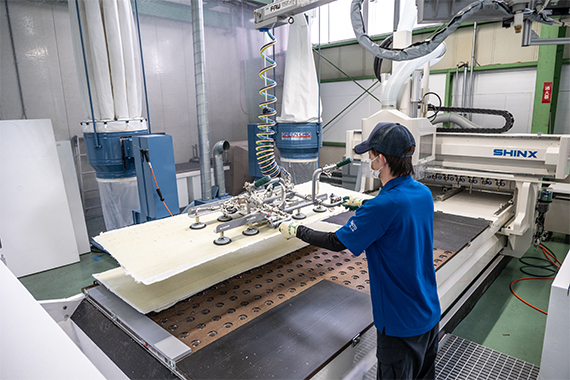
Stable loading into the processing machine, with higher efficiency
Flex Arm supports the workpiece weight and grips it by suction, allowing stable loading into the processing machine. Reduces the physical burden on operators' lower backs and shoulders from roughly 100 operations a day. Anyone can operate it, which also raises efficiency. The circuit disables vacuum break once a workpiece has been lifted, until it is set down again (no-load detection interlock), so there is no risk of dropping a workpiece through human error. Workpieces containing glass fiber are transported safely at any desired speed without being touched by hand.
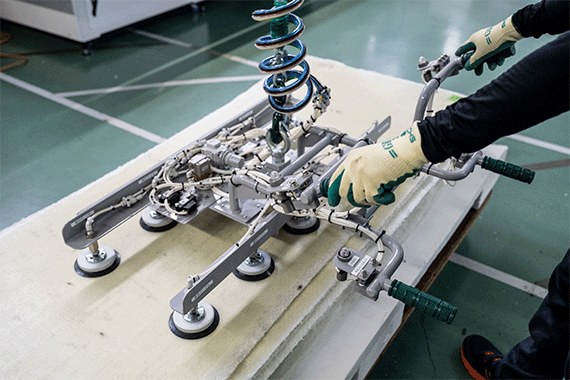
Japan's Ministry of Health, Labour and Welfare promotes the correction of awkward working postures as a measure against lower back pain. Conditions vary, but bending forward is said to place 2.2 to 2.75 times (220% to 275%) more strain on the lower back than standing upright. This specification has handles at both upper and lower positions, so even when the stack height is low, operators can work in a natural posture without crouching. Building a workplace where anyone can do the job regardless of gender or age is essential to promoting diversity. The company plans to keep making improvements toward a workplace where everyone can thrive. It will also continue contributing to a recycling-oriented society by developing new products and bringing expanded polystyrene to more people.